
Case study · freight & waste logistics
Camden Market
waste by water.
A canalside bin store, a covered dock and a waterside recycling facility were connected by a scheduled barge movement instead of road vehicles.
The project
Connect two waterside
operations.
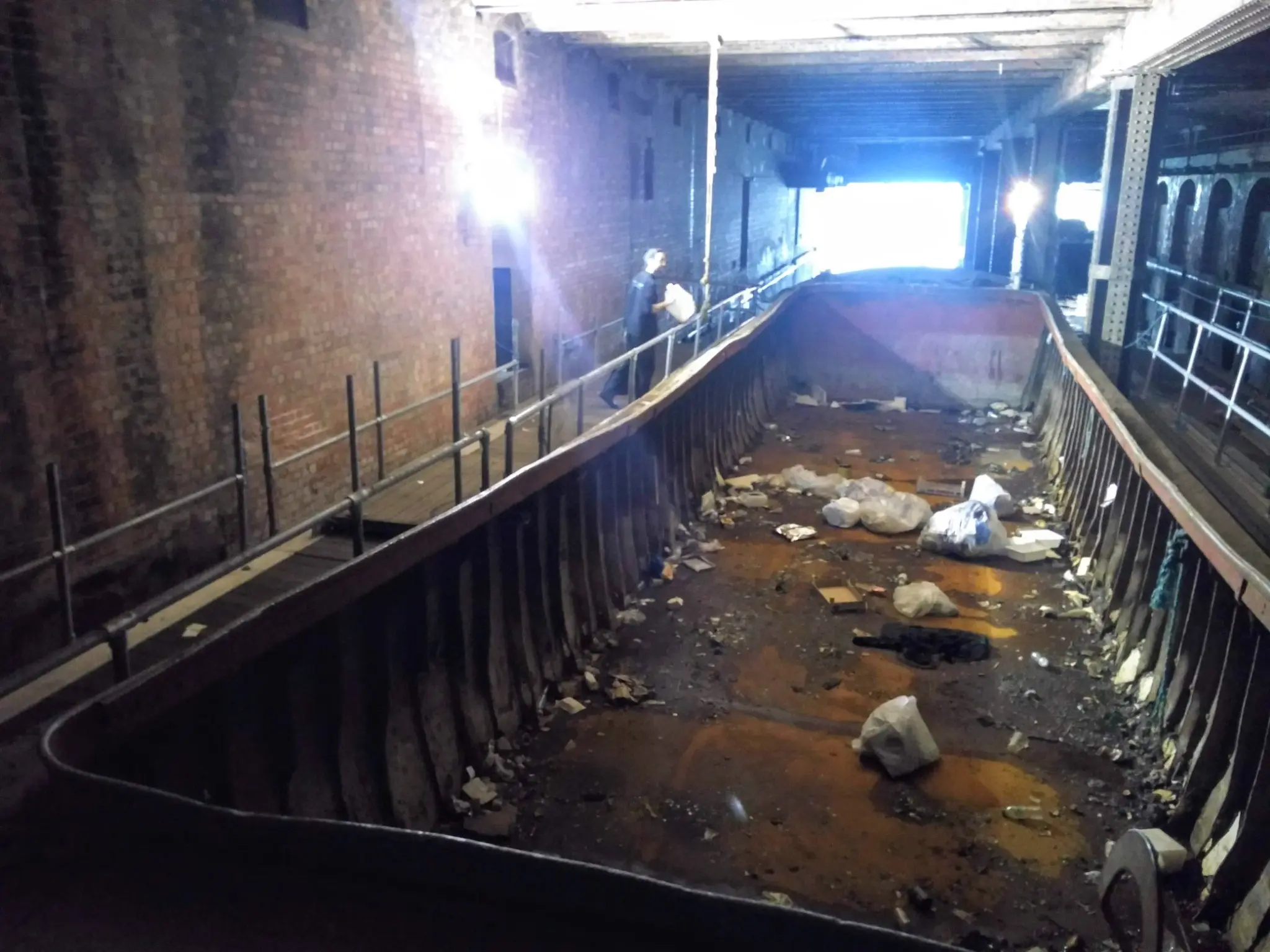
Camden Market sits beside the Regent’s Canal, next to the Interchange Building and its covered canal dock. The market’s bin store was immediately adjacent to that dock, creating an unusual opportunity to load waste directly to a barge.
WHH worked with Camden Market and iRecycle to turn that physical relationship into a practical collection method. A barge could remain in the dock beside the bin-store access, allowing the waste team to load it as part of the normal operation.
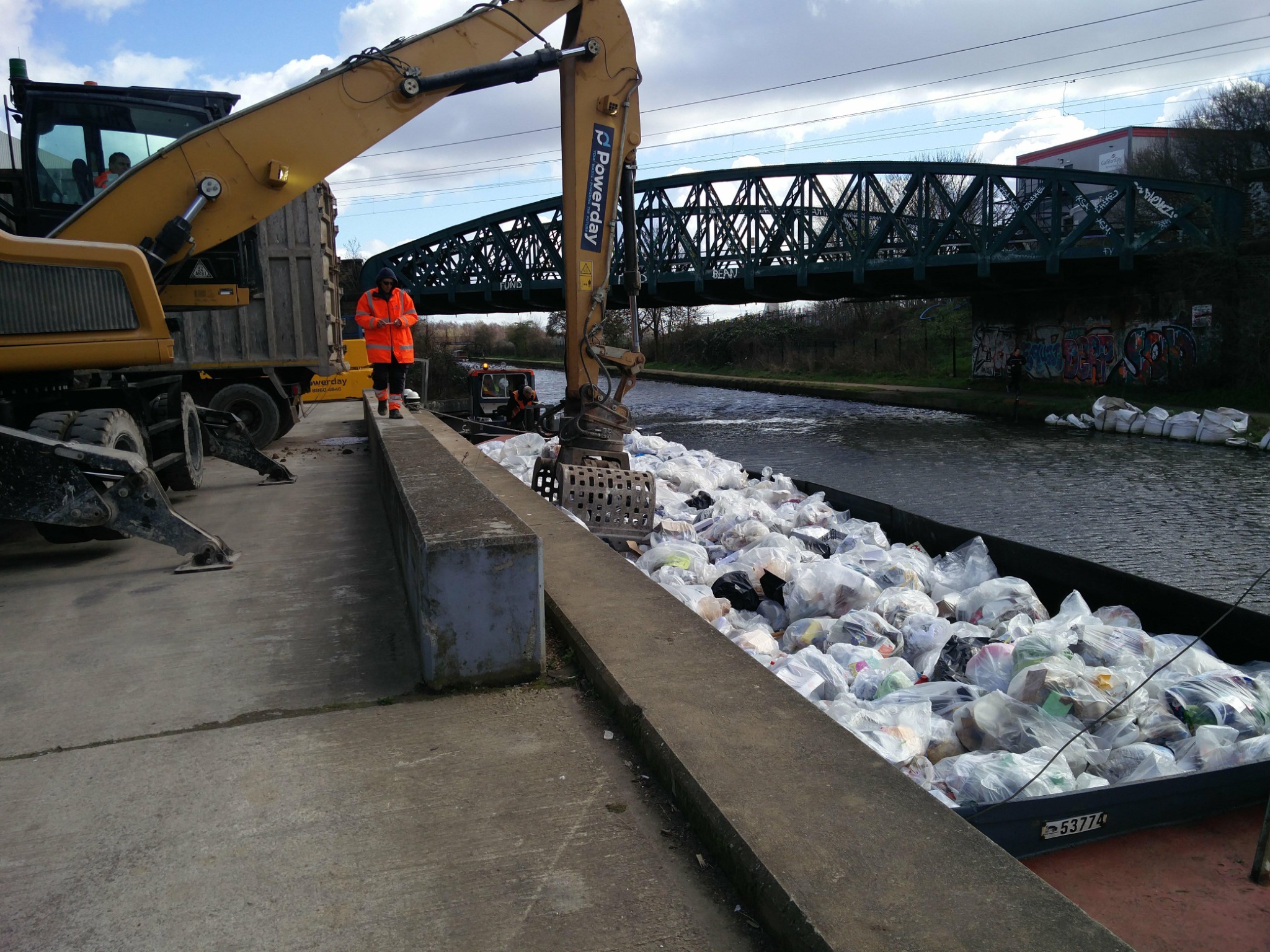
When full, WHH provided the tug and skipper to move the barge to Powerday’s Old Oak Wharf in Willesden, empty it and return it to the Interchange dock.
The constraint
A busy market needs
a quiet route out.
The method had to address the full working environment:
- A congested central London location
- Routine waste transfer without extra road collections
- A covered dock requiring suitable craft and operation
- Coordination between market, waste and wharf teams
The WHH response
A method built
around the site.
Vessels, plant and movements were combined around the project sequence rather than treated as separate hire items.
Barge at the bin store
The loading point was positioned directly beside the existing waste operation inside Interchange dock.
Scheduled collection
A tug and skipper collected the loaded barge when required rather than maintaining a powered vessel on site.
Direct canal route
The load travelled by water from Camden to the canalside recycling facility at Old Oak Wharf.
Returnable capacity
The empty barge returned to the dock ready to receive the next load.
The result
No road leg
at either end.
Because both the source and destination were beside the canal, the service avoided a road transfer between them.
The operation reduced vehicle demand around an already busy market and made productive use of existing waterway and wharf infrastructure for a repeat movement.
Explore freight & waste logistics →A comparable constraint?
Make the waterway part of the method.
Share the site, loads, access points and programme constraints. WHH can help test and develop a practical marine approach.
Discuss a similar project ↗