
Case study · freight & construction logistics
London basement
waste by barge.
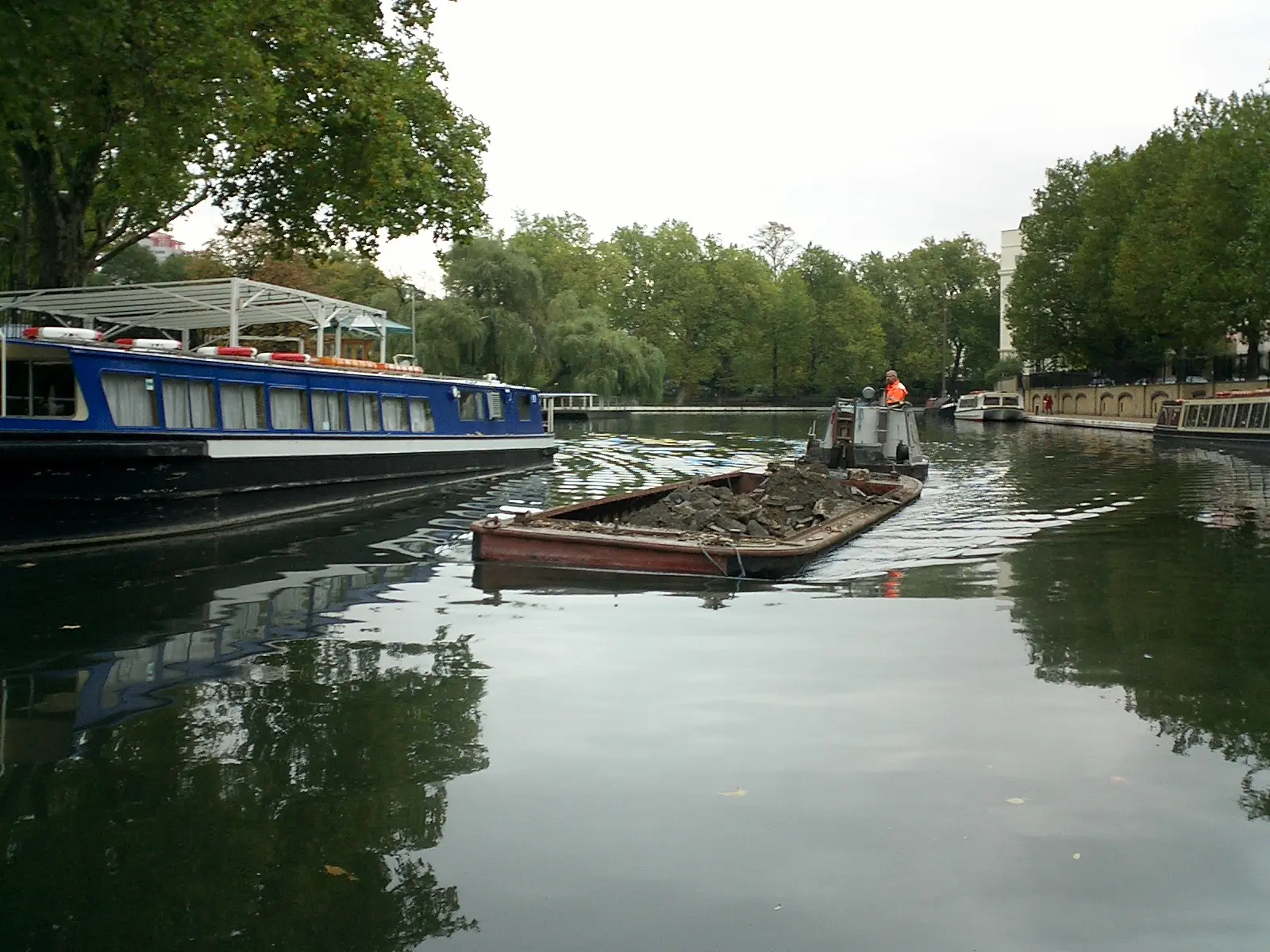
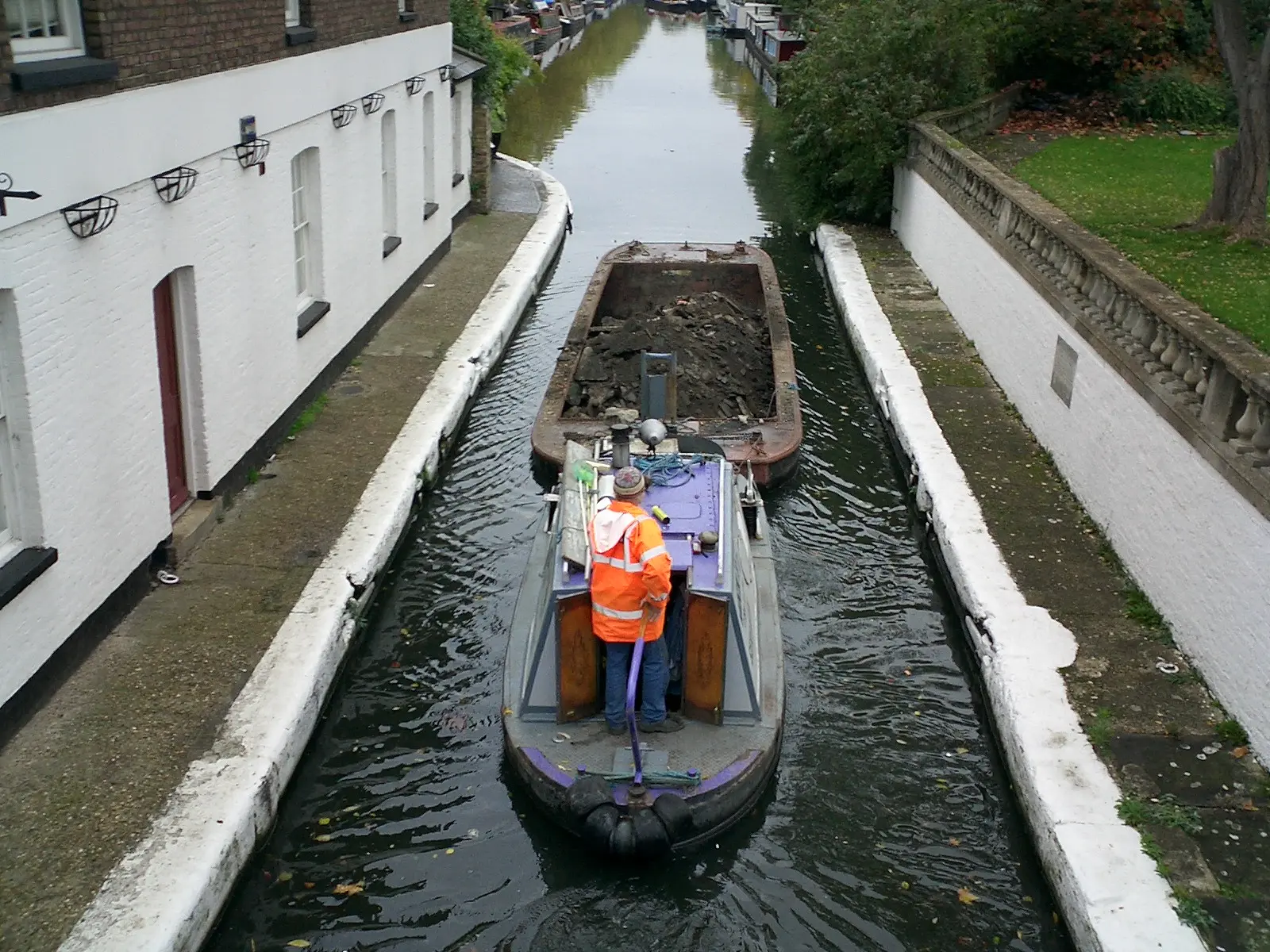
Around 700 tonnes of excavated material moved from a canalside residential project to a waterside recycling facility in 35 barge loads.
The project
A back garden
became the loading point.
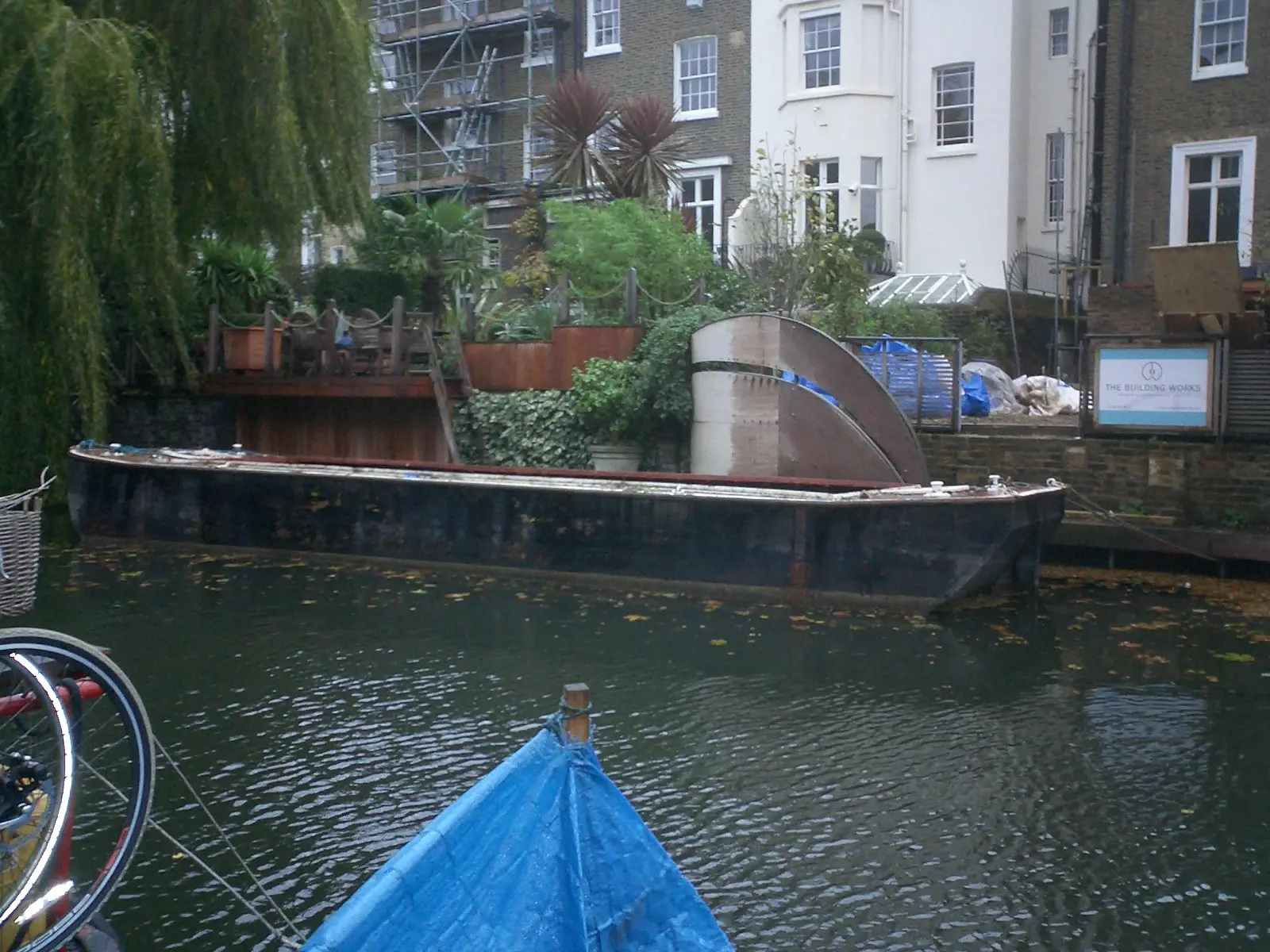
A residential basement extension at St Mark’s Crescent backed directly onto the Regent’s Canal. Moving excavated material through the house and onto the road would have introduced skips, parking suspensions and repeated vehicle movements into a residential street.
WHH assessed the end-of-garden mooring and supplied a compact 11m by 3m barge with an approximate 20-tonne capacity. A crane barge also lifted a mini excavator and dumper into the garden from the canal.
The contractor installed a small conveyor across the garden. Once loaded, each barge was moved approximately five miles by canal to Powerday’s recycling facility in Willesden before returning for the next load.
The constraint
Remove spoil without
working through the house.
The method had to address the full working environment:
- Residential street and occupied-property interfaces
- Limited room at an end-of-garden mooring
- Need to move plant into the rear garden
- Regular disposal movements over the construction period
The WHH response
A method built
around the site.
Vessels, plant and movements were combined around the project sequence rather than treated as separate hire items.
Compact carrying barge
A small barge was selected to fit the garden mooring while carrying approximately 20 tonnes per load.
Plant delivered by water
A crane barge lifted the mini excavator and dumper directly into the rear garden.
Simple loading method
A short conveyor connected the excavation workflow to the barge at the canal edge.
Waterside-to-waterside route
Loaded barges travelled directly to a canalside recycling facility, avoiding a road leg at either end.
The result
35 loads instead of
skip movements.
Between October 2018 and 31 March 2019, approximately 700 tonnes of excavated material were removed in 35 barge loads.
The approach avoided skip lorries and suspended parking bays, reduced disturbance at the front of the property and allowed the site team to work from the excavation directly towards the canal.
Explore freight & waste logistics →A comparable constraint?
Make the waterway part of the method.
Share the site, loads, access points and programme constraints. WHH can help test and develop a practical marine approach.
Discuss a similar project ↗