Case study · utilities & towpath works
Murphy cable
replacement works.
A complete floating operation supporting a major cable-replacement programme along a constrained live towpath in West London.
The project
A linear worksite
with limited land access.
Murphy’s cable-replacement programme followed the Grand Union Canal towpath through West London. The workface moved along a narrow public route beside an open navigation, while cable, specialist equipment, materials and crews all needed dependable access.
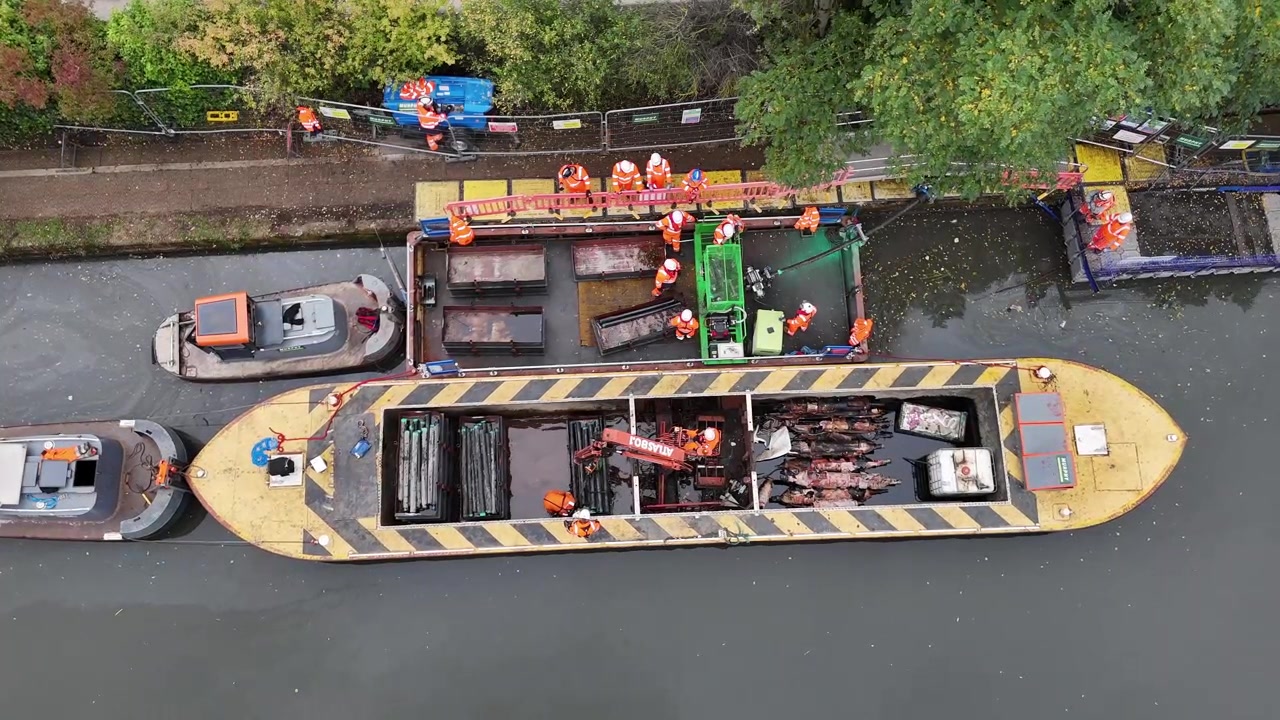
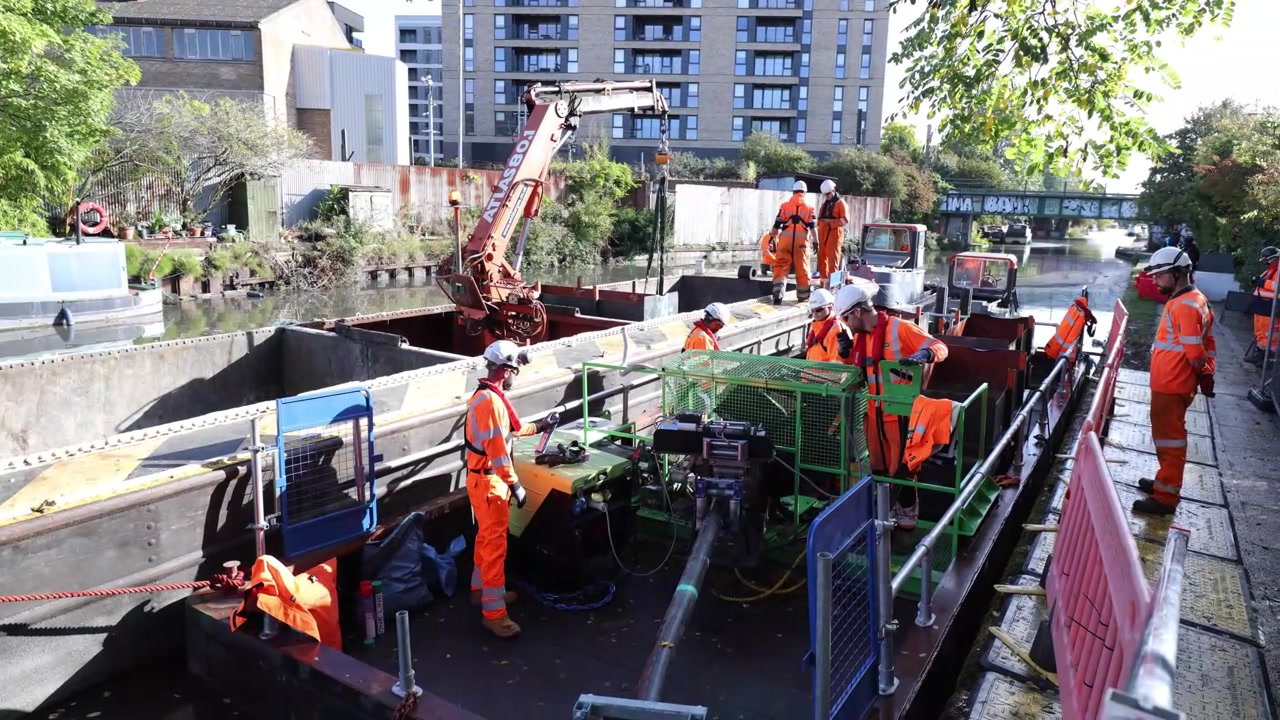
WHH developed the marine element as an integrated operation. A group of vessels provided cable storage and handling space, lifting and logistics capacity, and welfare and operational support close to the workface.
As the route progressed, the floating worksite could move with it—reducing dependence on continuous vehicle access along the towpath and keeping the equipment needed for each stage within reach.
The constraint
Keep a changing workface
productive.
The operation had to bring together several interfaces in a compact canal corridor:
- Heavy and awkward cable-handling requirements
- Intermittent land-side access points
- A live navigation and public towpath
- Storage, welfare and working space close to the route
- Vessel movements coordinated with the wider programme
The WHH response
One coordinated
production system.
The plant, vessels and crews were configured around the operation rather than supplied as unrelated hire items.
A moving floating worksite
The vessel spread was planned as one production system that could progress with the towpath workface rather than operate as separate hire items.
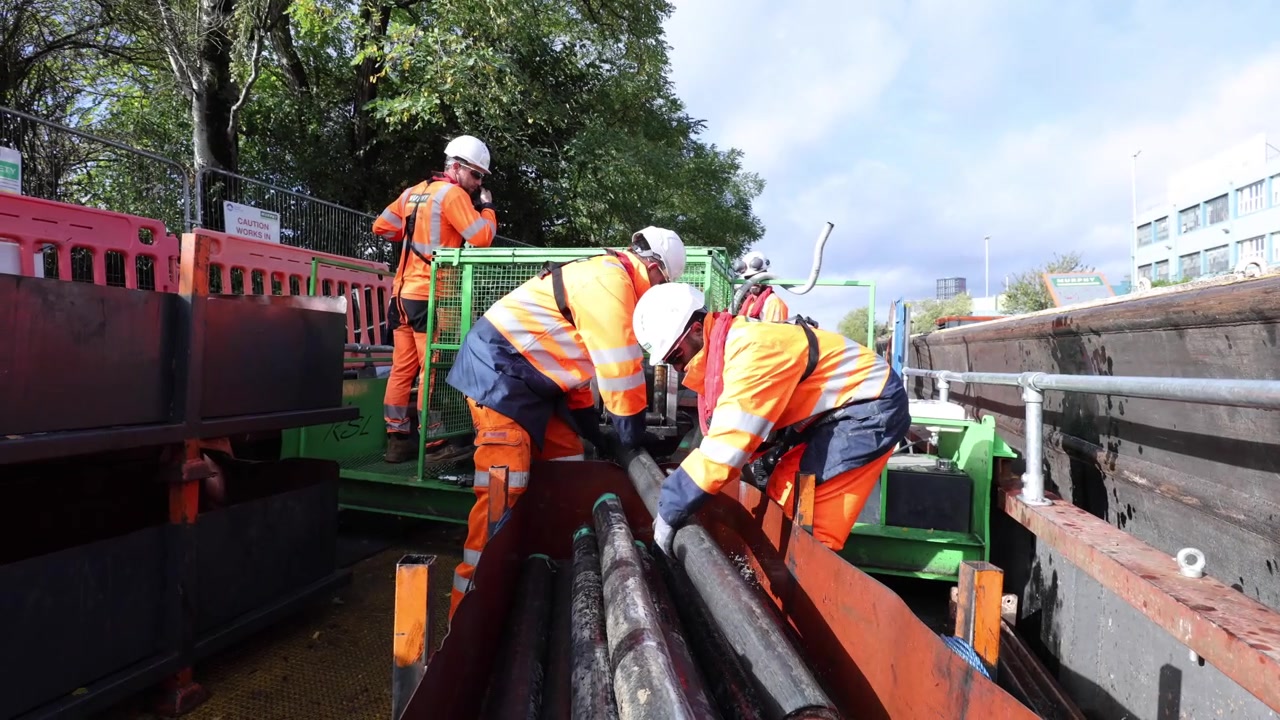
Specialist cable handling
Project-specific guidance and handling equipment was integrated into the floating workspace to support controlled extraction and installation operations.
Storage and logistics
Workboats and barges carried cable, equipment and materials between suitable access points and the changing workface.
Welfare and operational support
Supporting craft kept welfare and working facilities close to the team while the operation advanced through a constrained canal corridor.
The result
The waterway became
part of the method.
The floating operation provided a practical route for plant, cable, people and support facilities to progress with the programme. Across the cable-removal phase, more than 250 tonnes of high-voltage oil-filled copper cable was safely extracted, de-oiled and recycled.
More importantly, the project demonstrated how marine logistics and project-specific plant can turn a difficult linear waterside site into a coordinated working operation.
Explore utilities & towpath support →Planning a linear waterside project?
Make the waterway part of the method.
Share the route, access points, loads and programme constraints. WHH can help develop the marine logistics, plant configuration and operating plan.
Discuss a similar project ↗