
Case study · bridges & temporary works
NOS Bridge
temporary works.
A removable screw-pile solution addressed soft tidal ground, restricted access and approximately three metres of headroom beneath the Northern Outfall Sewer Bridge.
The project
Temporary support in
a tidal creek.
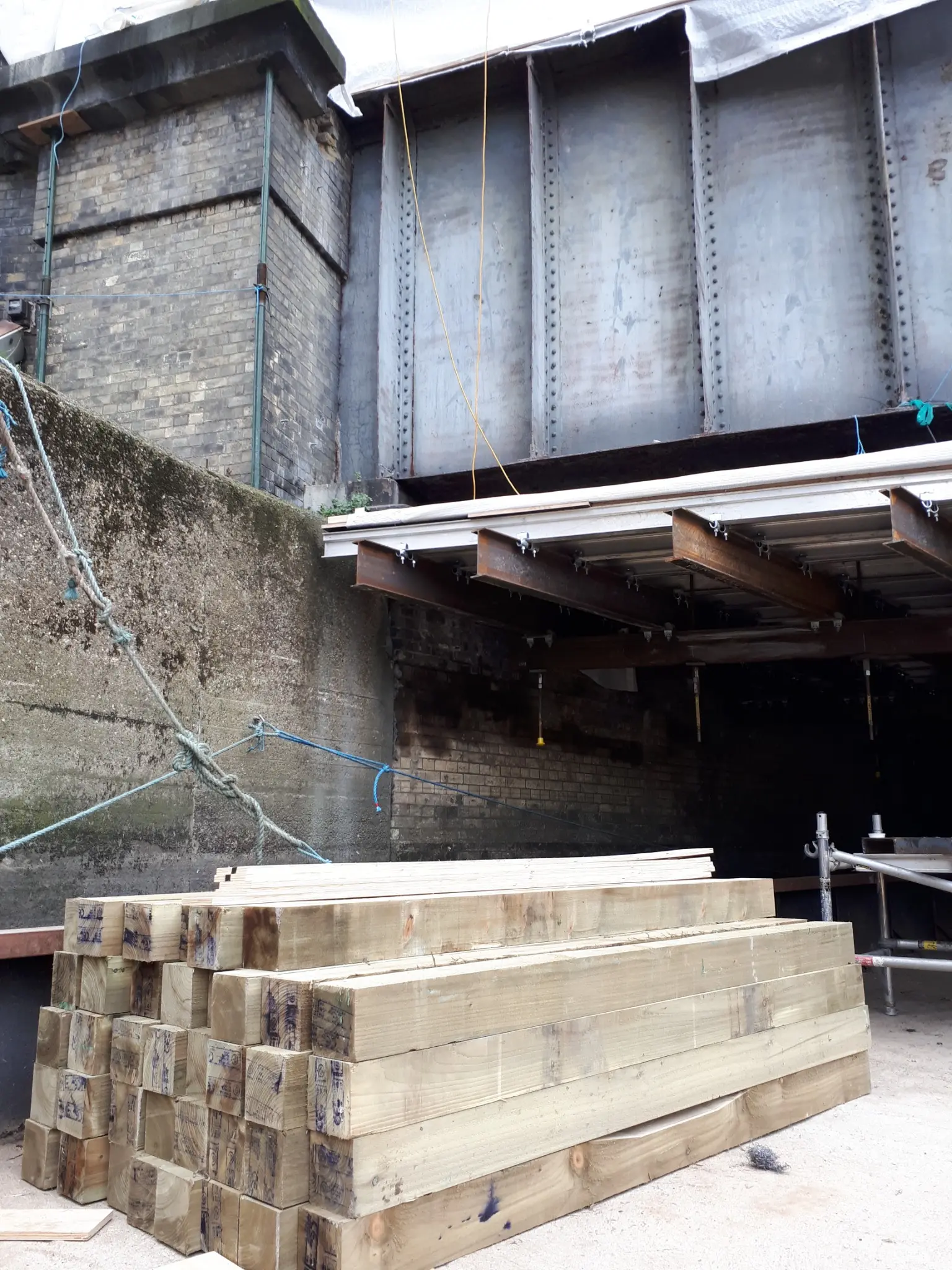
A damaged bearing on Girder K of the Northern Outfall Sewer Bridge required replacement above Channelsea Creek. The work area sat within a tidal channel that exposed soft mud at low water.
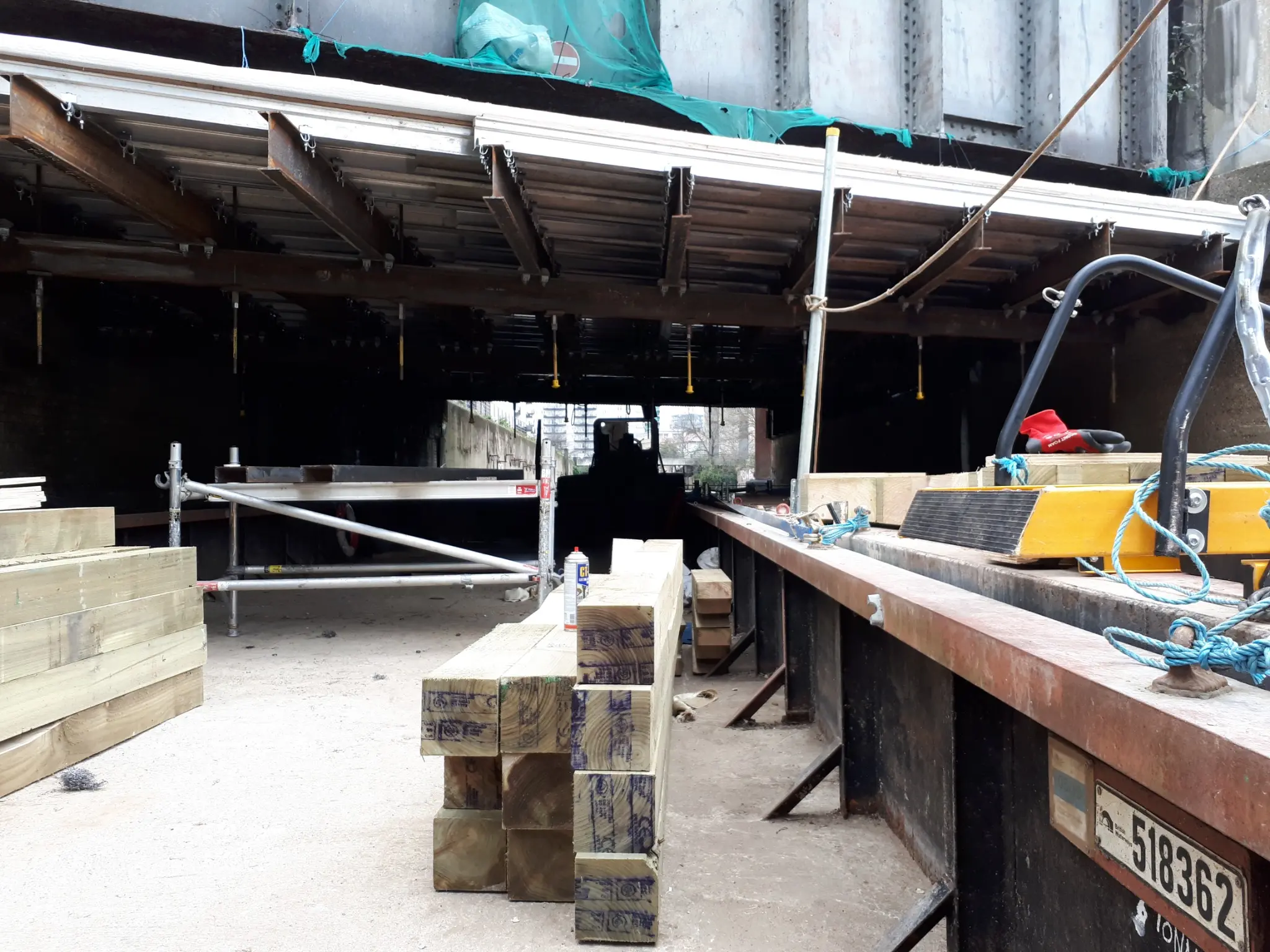
Access was constrained from both directions. Headroom beneath the bridge was approximately three metres, while access to the structure from above was limited by the Greenway.
Options including cantilevered piles and sunk temporary structures were considered. WHH developed a screw-pile solution that could be installed using compact plant suited to the restricted envelope.
The constraint
Soft ground.
Low headroom.
The method had to address the full working environment:
- Tidal working conditions
- Soft exposed creek bed at low water
- Approximately 3m headroom beneath the bridge
- Limited access from the Greenway above
- Temporary works requiring later removal
The WHH response
A method built
around the site.
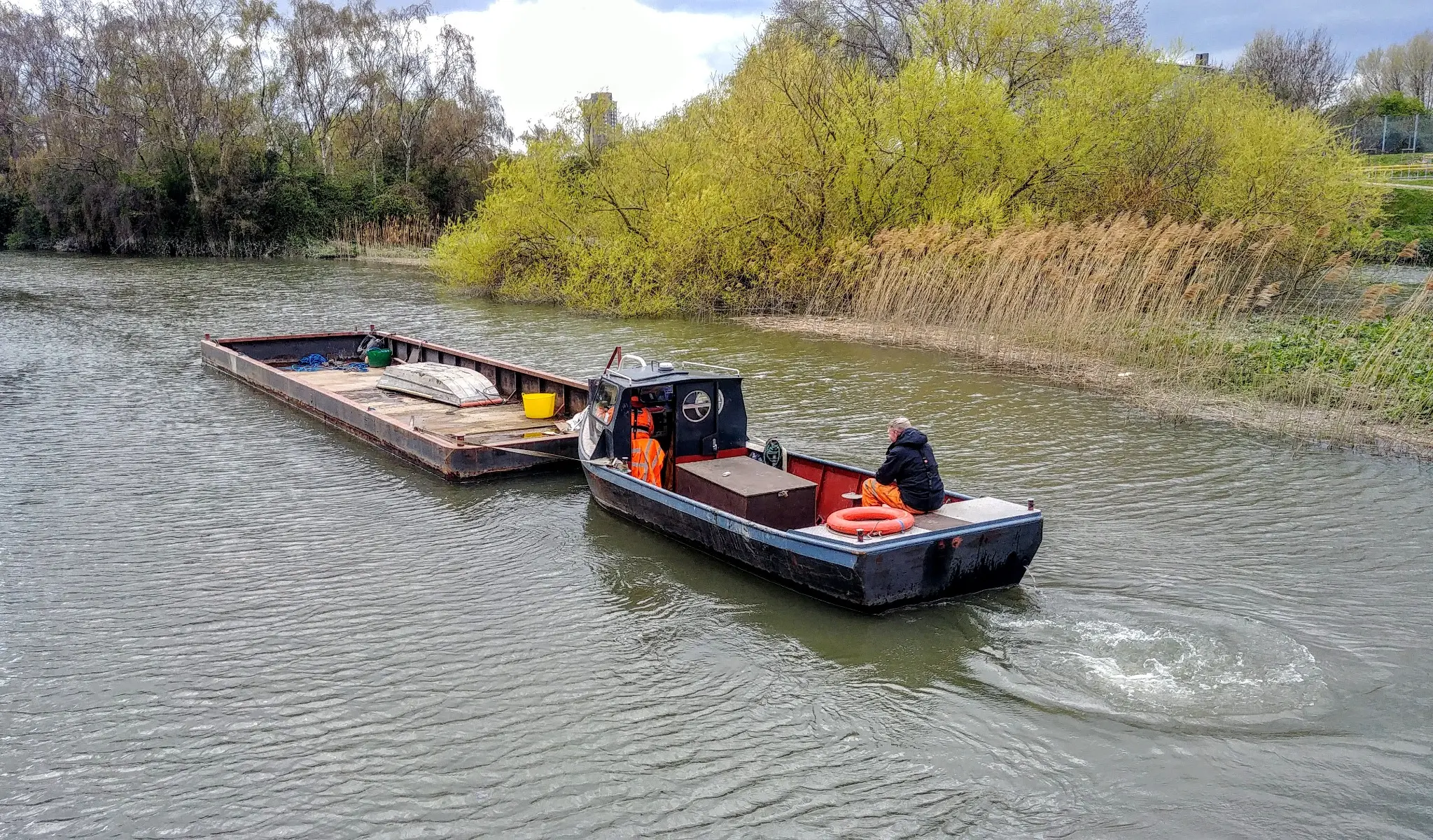
Vessels, plant and movements were combined around the project sequence rather than treated as separate hire items.
Compact installation plant
The screw-pile method reduced the size of plant needed beneath the low bridge structure.
Suitable for temporary works
The piles could provide the required support and then be unscrewed at the end of the operation.
Installation feedback
Hydraulic installation torque provided a practical source of information for verifying pile performance.
Method shaped by access
The solution was selected around the tidal window, soft ground and restricted working envelope rather than forcing conventional plant into the site.
The result
A removable solution
for a difficult footprint.
Screw piles provided a practical temporary-works approach that could be installed with smaller equipment beneath the bridge and removed after the bearing work.
The case shows the value of selecting plant and foundation methodology around the real physical constraints of a tidal, low-headroom site.
Explore bridges, rail & structures →A comparable constraint?
Make the waterway part of the method.
Share the site, loads, access points and programme constraints. WHH can help test and develop a practical marine approach.
Discuss a similar project ↗